How Does Hinged and Sliding Glass Shower Door Differ?
How Do Hinged and Sliding Glass Shower Doors Differ?
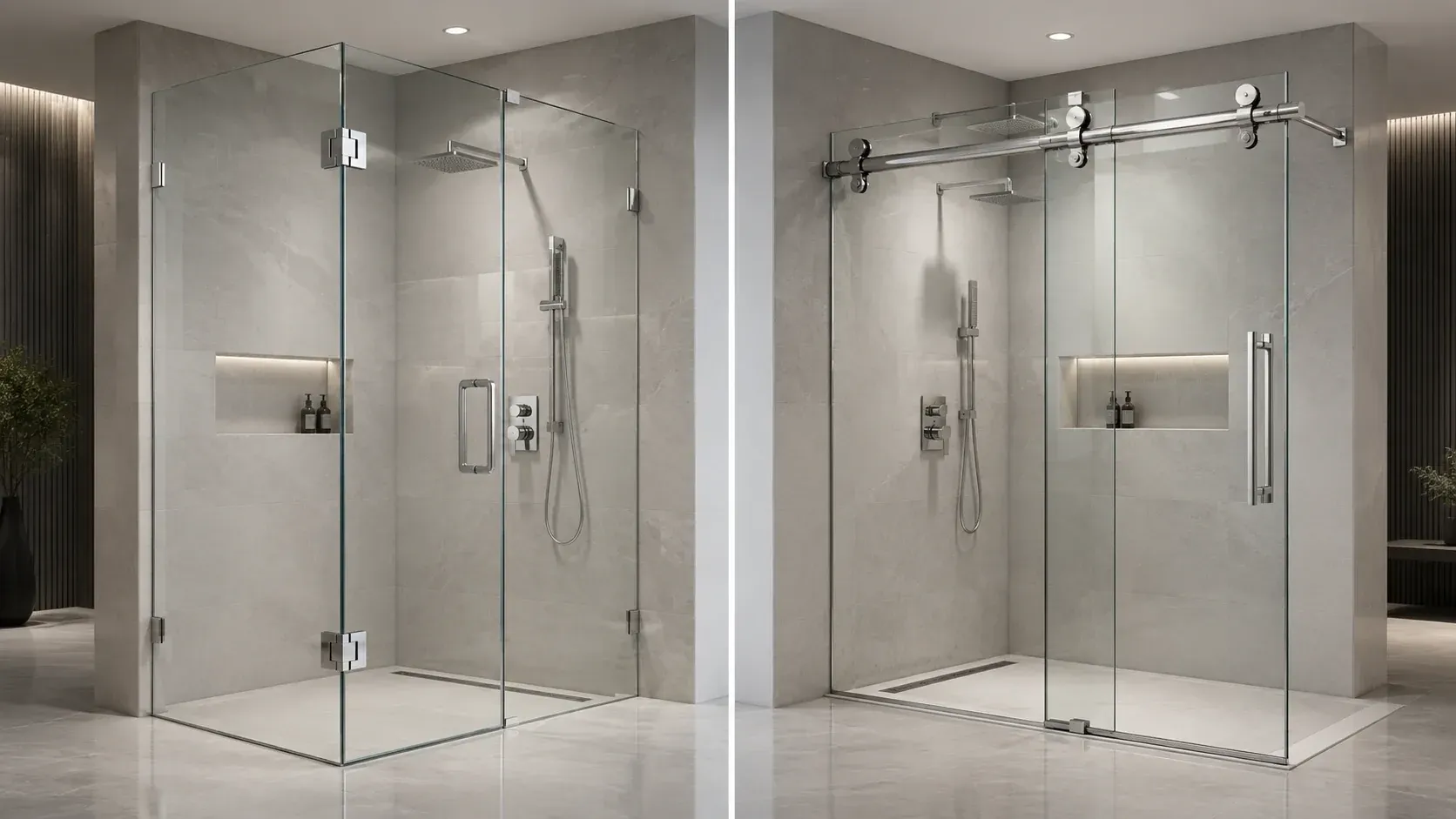
A hinged shower door swings open. A sliding glass shower door moves sideways. That one difference can change how the whole bathroom works. A hinged door needs clear space in front of the shower. A slider stays within the enclosure area. That can help when a vanity, toilet, or narrow walkway sits close by. At GLASSiFiED, we start with the bathroom. We look at the shower opening, nearby fixtures, door clearance, water direction, and daily use. Then we determine which door makes more sense. Both styles can create a clean, frameless look with custom glass door installation. The better choice is the one that fits your space.
Key Takeaways
- Hinged doors need room to swing.
- Sliding doors save floor space.
- Hinged doors can provide a wider, more direct entry.
- Sliding doors may reduce entry width because panels overlap.
- Both styles can work with frameless glass.
- Water control depends on the entire shower layout.
- Cost depends on the glass, hardware, size, and installation.
Hinged vs. Sliding Shower Doors at a Glance
| Consideration | Hinged Door | Sliding Door |
|---|---|---|
| Movement | Swings open | Slides sideways |
| Floor clearance | Needs swing space | Saves floor space |
| Entry | Often wider and more direct | Depends on panel overlap |
| Hardware | Hinges or pivots | Rollers, guides, and support hardware |
| Cleaning | Usually fewer overlapping areas | More hardware and overlap to clean |
| Good for | Open bathroom layouts | Tight bathroom layouts |
| Frameless option | Yes | Yes |
| Cost | Depends on design | Depends on design |
The table gives you the basic difference.
Your bathroom decides the rest.
When Does a Sliding Glass Shower Door Make More Sense?
A sliding glass shower door works well when space outside the shower is tight.
The door moves along the enclosure. It does not swing into the bathroom.
That can help when the shower is close to:
- A vanity
- A toilet
- A tub
- A towel bar
- Another door
- A narrow walkway
Think about a vanity sitting directly across from the shower.
A hinged door might technically fit. But opening it every day could feel awkward.
A slider avoids that swing.
Sliding Does Not Have to Mean Bulky
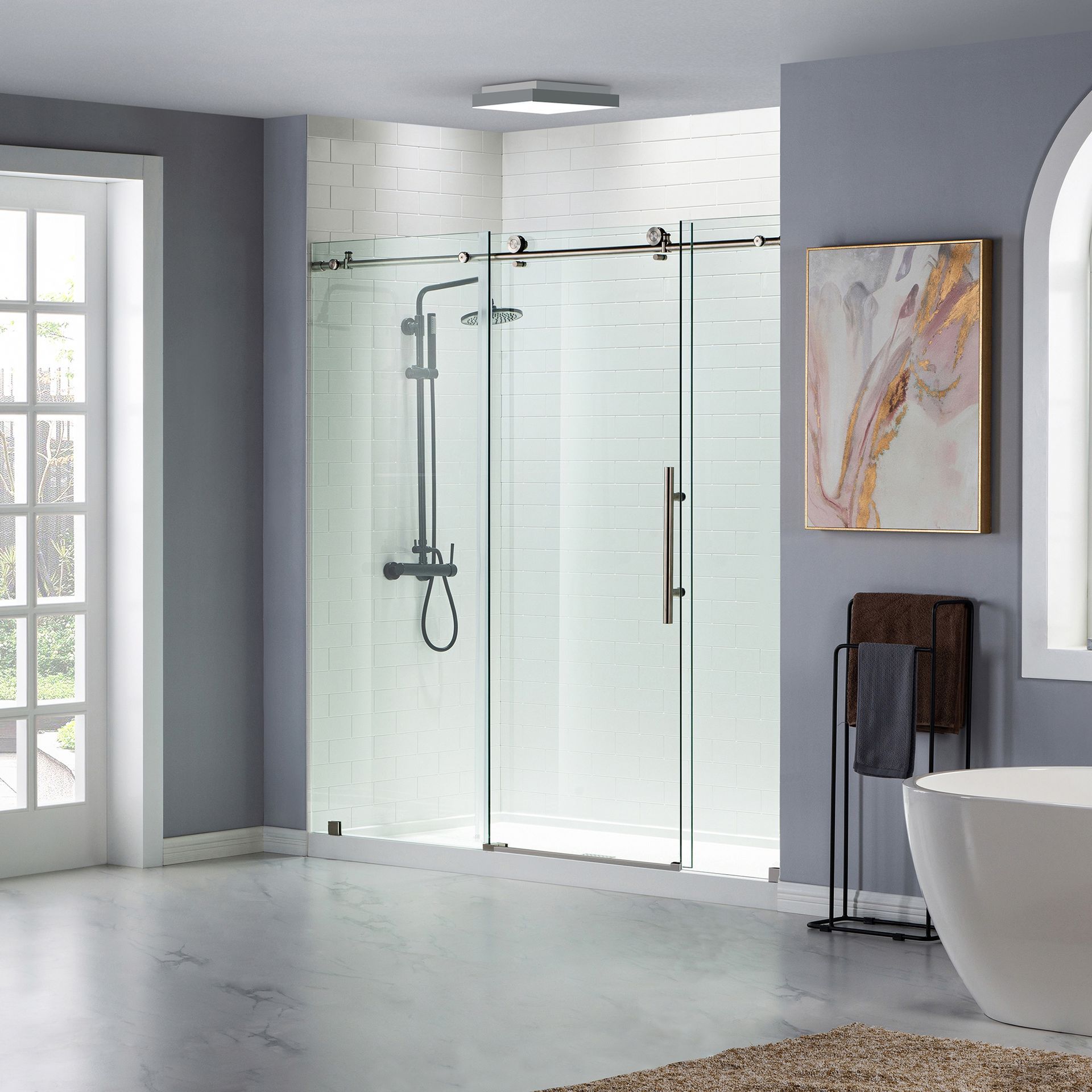
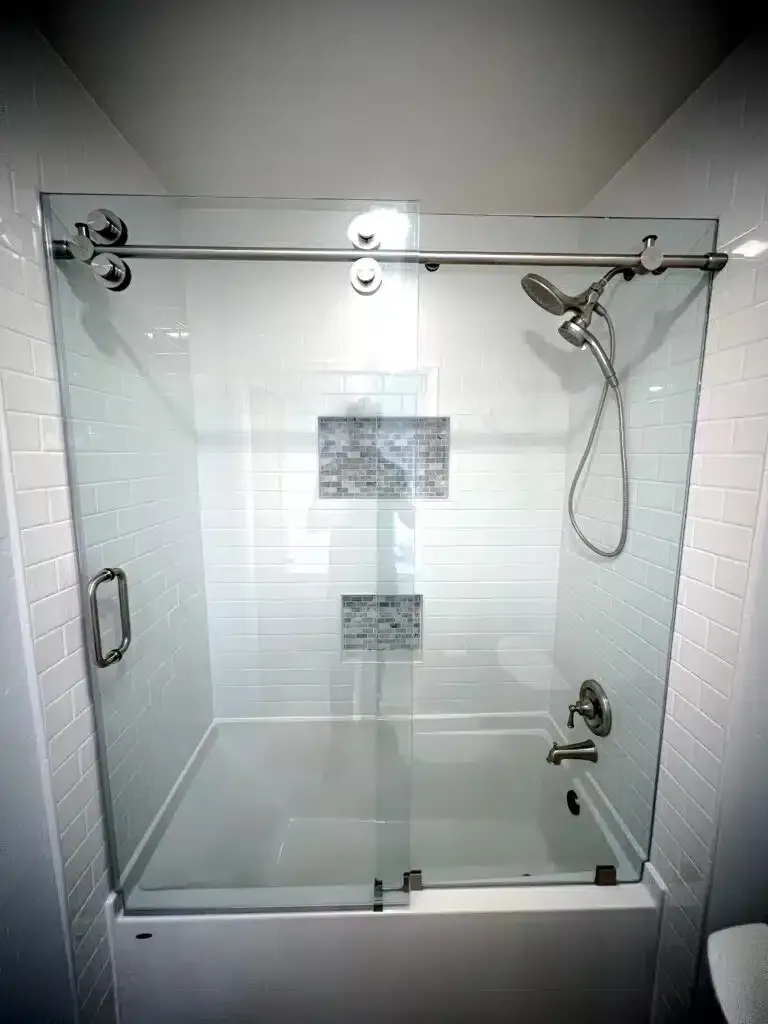
Older sliding shower doors often had large metal frames and bottom tracks. Modern frameless systems can look very different. Some use one fixed panel and one sliding panel. The moving glass runs on rollers near an upper support bar. Only a small guide may be needed near the floor. Current frameless sliding systems from manufacturers such as C.R. Laurence use this type of configuration. So you can maximize bathroom space without giving up the frameless look.
When Does a Hinged Shower Door Make More Sense?
A hinged door works well when there is enough room in front of the shower. The door swings open like a standard door. That creates a simple and direct entrance. But the swing path matters. Before choosing a hinged door, check what sits nearby. A vanity, toilet, wall, cabinet, towel rack, or bathroom door can get in the way. The door should barely clear another fixture. Proper door placement and clearance should allow it to open comfortably. That is why we measure more than the shower opening. We look at the room around it.
Which Door Gives You a Wider Entry?
A hinged door often gives you a more direct opening. When the door swings away, much of the doorway can become usable entry space. A sliding system works differently. The moving panel needs somewhere to slide. In many designs, it overlaps a fixed panel. That means the total enclosure width and the actual entry width are not the same. This matters more in a narrow shower. In a wide enclosure, custom shower door installation may still provide a comfortable opening. The opening needs to be measured before the hardware and panel layout are finalized.
Not sure which door fits your bathroom?
We'll look at your space, explain the trade-offs, and give you a free estimate.
Which Shower Door Is Easier to Clean?
Hinged doors are often simpler.
There are usually fewer overlapping glass areas.
You still need to clean:
- Hinges
- Handles
- Seals
- Glass
- Bottom sweeps
Sliding doors add more moving parts.
That may include rollers, guides, support bars, and overlapping glass.
Modern frameless sliders can use minimal hardware, but those parts still need cleaning.
The bigger issue is access.
A glass panel squeezed beside a vanity may be harder to clean than a slider with easy access on both sides.
We look at the actual layout, not just the door style.
Which Door Controls Water Better?
Either one can work well.
Water control depends on more than the door.
We also look at:
- Showerhead direction
- Door location
- Fixed panels
- Curb or threshold
- Glass alignment
- Seals and sweeps
A showerhead aimed directly at the opening can cause problems with either style.
The glass cannot fix a poor water layout on its own.
This is why the door and shower design should be planned together.
Does a Sliding Shower Door Need a Bottom Track?
Not always.
A frameless slider does not have to use the large bottom track found on many older shower doors.
Some systems support the sliding panel from hardware above the glass.
A smaller floor guide keeps the door aligned.
That gives you the space-saving benefit of a slider with a much cleaner look.
The exact hardware depends on the enclosure.
We choose the glass and hardware as one system.
Is a Hinged or Sliding Shower Door More Expensive?
Neither style is always cheaper.
Cost depends on the actual enclosure.
Important factors include glass size, panel count, hardware, door style, finish, opening conditions, and installation complexity.
A simple hinged door may cost less than a large frameless slider with specialized hardware.
Another bathroom may produce a different result.
That is why we price the real project.
At GLASSiFiED, we custom-measure the opening and provide a free estimate based on the enclosure you need. GLASSiFiED currently offers both hinged and sliding shower-door options as part of its custom Tampa Bay glass services.
Why Does the Finished Shower Opening Matter?
Custom glass should fit the finished shower. Tile can change the opening. So can the curb, walls, waterproofing, and final finishes. Even small changes matter. Frameless glass does not have a large perimeter frame to hide measurement errors. That is why final measurements should reflect the surfaces the glass will actually meet. We also check nearby fixture and hardware placement locations. The goal is simple. Build the enclosure around the finished bathroom.
What About Shower Glass Safety?
Door style does not change the need for proper safety glass.
Federal architectural glazing rules cover shower doors and shower enclosures under 16 CFR Part 1201.
GLASSiFiED uses high-quality tempered glass for custom shower installations.
The glass also needs the right hardware and support.
Good installation depends on the complete system.
How Do You Choose Between Hinged and Sliding?
Start with the room.
Ask yourself:
Is there enough space for the door to swing?
If not, a slider may solve the problem.
Is the shower opening wide enough for a slider?
Remember that the panels need room to overlap.
Do you want the widest possible entry?
A hinged door may have an advantage.
Where is the showerhead?
Water direction can affect door placement.
What sits beside the shower?
Check the vanity, toilet, walls, and walkways.
Which hardware do you prefer?
Both can look clean and modern, but they use different hardware.
Do not choose the door from a photo.
Choose it from the bathroom.
Get an exact price for your project
Free estimates based on your actual space and design.
How Does GLASSiFiED Help You Choose?
We measure first. Then we look at how the bathroom works. We check the opening, fixtures, door clearance, water direction, glass layout, and hardware.
GLASSiFiED brings more than 20 years of glass experience to custom shower projects throughout Tampa Bay. The company focuses on custom measurements, quality materials, professional installation, and free estimates. We are not trying to force a slider or hinged door into the space. We want the door to feel natural once you use the bathroom every day.
Hinged or Sliding? Start With the Bathroom
A hinged shower door works best when you have space for the glass to swing. It gives a straightforward entry. A sliding glass shower door is the better pick when the area is tight. It also helps when nearby fixtures get in the way. Either style can look neat and modern. Either option can perform well in real use. The best choice is the one that matches your bathroom layout. GLASSIFIED takes care of custom measuring and installation for frameless shower enclosures and shower doors across Tampa Bay. Get a free estimate from GLASSIFIED. Call 813-480-7199. Contact us today!
Frequently Asked Questions
Q: Do sliding shower doors work in tight bathrooms?
A: Yes. They help when you cannot fit a swinging door. You still need room for the panels to slide and for you to enter.
Q: Can a sliding shower door be frameless?
A: Yes. Some newer options use small parts and rollers on top. The glass can be set as fixed panels without a thick frame around it.
Q: Are hinged shower doors better than sliding ones?
A: Not in every case. A hinged door can be great if you have space to swing it open. A sliding door can be a better fit when the floor area is tight.
Q: Are sliding shower doors harder to clean?
A: They can be. More moving parts and overlapping glass may mean more to wipe. How hard it is depends on the setup and the room shape.
Q: Can I swap a hinged door for a sliding door?
A: Maybe. You must check the opening size, the tile work, the wall condition, the panel plan, and what hardware will fit.
Q: When should I measure the shower door?
A: Do it early, then finalize it later. Wait to take the last measurements until the surfaces that change the opening are done.